
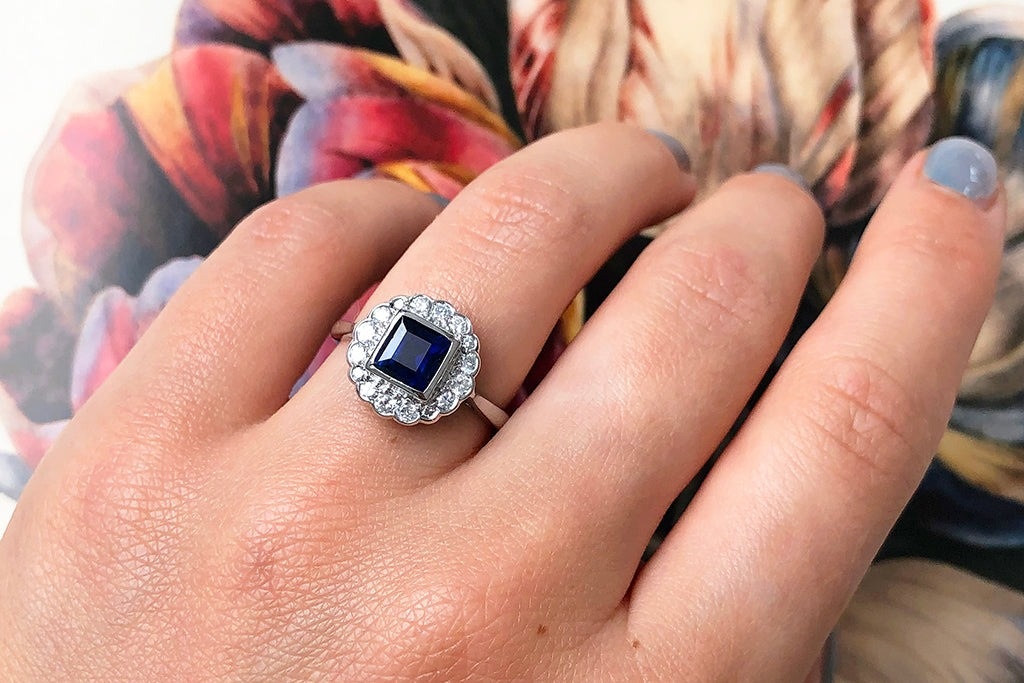
06 Oct What Makes Vintage Engagement Rings So Romantic?
A vintage engagement ring carries more than just sparkle — it brings with it a whisper of history, a story of craftsmanship, and an air of timelessness. For modern brides who long for something meaningful and unique, choosing a vintage ring is a way to connect past and present.
By “vintage engagement ring,” we generally mean a ring that’s at least 20–30 years old, often dating from the Victorian, Edwardian, Art Deco, or mid-century eras. These rings often feature distinctive design features — milgrain edges, filigree work, engraved patterns, and old-cut stones — that you won’t often see in mass-produced modern rings.
In this piece, we’ll answer the key questions that a prospective bride (or buyer) might search for, explore pros and cons, share tips for selecting and caring for a vintage ring, and offer guidance on marrying antique charm with contemporary lifestyles.
What defines a vintage engagement ring, and how is it different from “antique” or “retro”?
Short answer: A vintage engagement ring is typically 20–100 years old, while “antique” usually refers to items 100+ years old, and “retro” denotes mid-20th century revival styles. But more than age, the defining features are design, craftsmanship, and character.
Let’s break that down further:
- Vintage: Generally rings made from the 1920s to the 1980s. They show stylistic design trends, like Art Deco geometry, Edwardian lacework, or Mid-Century minimalist lines.
- Antique: Legally, items over 100 years old. So rings from the Victorian (1837–1901) or Edwardian (1901–1915) eras often fall into this category.
- Retro / Revival: Rings made more recently that mimic earlier styles (for example a newly made ring in Art Deco style). They’re not truly vintage but can replicate its charm.
Design is a big differentiator. Many vintage pieces show hand-engraving, intricate shoulders, filigree or milgrain — details that are less common (or more costly) in modern mass production. Also, older cut stones (old European, old mine, rose cut) may appear, which have different sparkle and proportion.
So when you see “vintage engagement ring,” you might envision a ring made in the 1930s or ’40s. “Antique” feels older, more formal. And “retro” is a modern twist on the classics. The romance lies in the story, the craftsmanship, and the rarity of these pieces — an old love letter incarnate as jewelry.
Why do modern brides choose vintage engagement rings?
Short answer: Because vintage rings bring uniqueness, sustainability, craftsmanship, and emotional depth — a meaningful alternative to mass-market options.
Here are the main reasons that attract modern brides to vintage engagement rings:
- Uniqueness: Vintage rings are rarely one of many identical pieces. Many are one-offs, so your ring feels special.
- Sustainable & Eco-friendly: You’re reusing something rather than producing new metals and mining new stones.
- Artistry & Craftsmanship: Older rings often have hand-finished details, intricate engraving, or filigree that are hard to replicate affordably now.
- Story & Sentiment: Owning a piece with decades (or a century!) of history adds emotional weight and connects you to the past.
- Value & Potential Investment: Vintage rings can hold — or even increase — in value if well maintained, especially rare styles or designer pieces.
- Customization Opportunity: Many vintage rings can be slightly modified (e.g. resetting a stone) to suit contemporary wear, blending old and new.
Importantly, many brides aren’t rejecting modern rings entirely — they see vintage as a way to express individuality, to stand out, and to wear something with character. It’s not just a ring. It’s a choice that says, “I want more than sparkle — I want soul.”
How do I evaluate the condition and authenticity of a vintage engagement ring?
Short answer: Inspect metal, stone settings, wear & tear, and paperwork; consider professional appraisal or certificate for assurance.
Here’s a deeper look at steps you should take:
- Examine the metal and setting: Look for signs of thinning, cracks, or repairs. Platinum and gold wear differently; older rings may have had previous work done.
- Check the stones: Are there chips, fractures, or replacements? Old cut diamonds have different facets and brilliance — make sure they are genuine and intact.
- Inspect craftsmanship details: Filigree, milgrain, engraving — check if these are crisp or fading. Soft or uneven work could signal over-polishing or damage.
- Ask for documentation or provenance: Receipts, appraisals, old photos — any proof of history helps. Certification from a trusted gem lab adds confidence.
- Request an appraisal: A trusted jeweler or gemologist can assess the ring’s carat weight, authenticity of stones, quality of metals, and repair need.
- Beware of over-restoration: Over-polishing, heavy reworking, or replacing too many parts can destroy originality and reduce value.
One practical tip: hold the ring against light and look at the metal under magnification. If the metal is extremely thin or there’s heavy soldering, that’s a red flag. Also, vintage rings may use settings or metals no longer common — if a jeweler offers to “upgrade” it heavily, pause and get a second opinion.
Which vintage era or style should I choose — Art Deco, Edwardian, Victorian, or Mid-Century?
Short answer: Choose based on your personal taste, lifestyle, and budget. Each era brings a unique aesthetic and practical considerations.
Below is a guide to key vintage eras and how they differ (with pros and cons):
| Era / Style | Years & Themes | Design Traits | Things to Consider |
|---|---|---|---|
| Victorian | 1837–1901 | Romantic scrolls, colored gemstones, mixed metals | Often uses lower clarity stones; metals may be fragile |
| Edwardian | 1901–1915 | Fine filigree, platinum lacework, light and airy | Delicate structure; may need reinforcement |
| Art Deco | 1920s–1930s | Bold geometry, step cuts, milgrain, symmetry | Edges and angles can be sharper; some stones are small |
| Retro / Mid-Century | 1940s–1960s | Chunkier gold, bold gems, playful curves | Often heavy, sometimes less intricate in detail |
| Mid-Century Modern | 1950s–1970s | Simpler lines, understated elegance, focus on the stone | Less metal work, so the stone is more exposed |
When choosing, ask yourself:
- Do you prefer bold, geometric forms (Art Deco) or soft, lacy detail (Edwardian)?
- Will the ring live in a very active, hands-on life (so you need durability)?
- What’s your budget — earlier pieces often cost more due to rarity, but certain mid-century styles are more accessible.
The goal is to match the ring’s personality to yours. A bride who loves structure might lean Art Deco; someone drawn to romance might prefer Edwardian or Victorian. And if you don’t find a perfect ring in your era, a hybrid or revival phase can also be considered.
How can a vintage ring be adapted or personalized for modern wear?
Short answer: Thoughtful modifications — resizing, resetting, structural reinforcement — let you merge old and new without destroying its essence.
Here are practical ways to adapt a vintage engagement ring:
- Resizing carefully: Use jewelers experienced with vintage rings. Avoid stretching unevenly or damaging delicate filigree.
- Resetting or re-pronging: If the original setting is weak, you can re-prong or gently reset the stone in a more secure mount while retaining original accents.
- Adding a modern band: A simple, contemporary wedding band can pair beautifully and support the vintage ring without competing.
- Minor cleaning & re-polishing: Light polishing can restore shine — but avoid over-buffing, which erases character.
- Reinforcing structure: Strengthening weak parts (shoulders, shank) while preserving original design where possible.
- Integrating mixed metals: If original parts are worn, sometimes new metal (invisible to view) is used internally to support the structure.
Aim for *sensitive restoration*. You don’t want your ring to look “newly made” — you want it to feel like refined history. Always work with a jeweler who respects period authenticity. Confirm before and after photos and detailed plans.
How much does a vintage engagement ring cost compared to a new one?
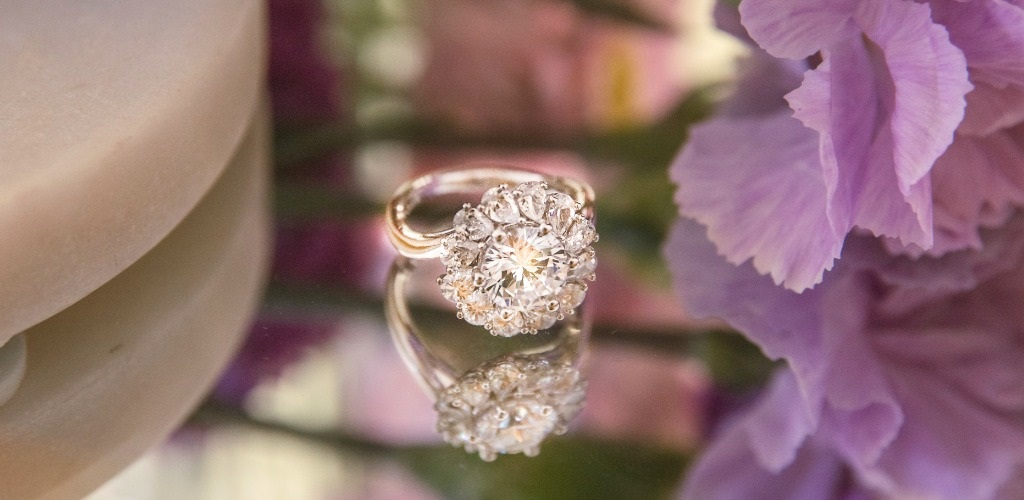
Short answer: Vintage rings vary widely in price — some can be bargains, others rival top modern pieces — depending on rarity, condition, and provenance.
Factors that influence cost include:
- Rarity of design or maker
- Quality, size, and cut of the gemstones
- Condition and restoration work required
- Demand for that style or era
- Provenance or historical association
A well-preserved vintage ring from a sought-after era can fetch as much (or more) than a comparable modern designer engagement ring. But many vintage rings — especially mid-century ones in good shape — can offer excellent value. You might pay less for the metal, but invest more in an appraisal or minor repairs.
A rough practical comparison: a new designer solitaire might cost $5,000; a vintage piece with a smaller diamond and strong style may cost $2,500–$4,500. But that same vintage ring, fully restored, may rival the newer ring in beauty while giving you that rare character.
Where should I search for vintage engagement rings, and how do I ensure trust?
Short answer: Look at reputable vintage jewelry boutiques, trusted auction houses, specialized online dealers, and estate sales — always with authentication, return options, and transparent history.
Tips and channels:
- Specialized vintage jewelry shops: These dealers focus on antique and estate jewelry and often provide appraisals, certifications, and repair services.
- Estate and consignment stores: Local outlets can sometimes yield hidden gems at lower cost, though authenticity checks are essential.
- Auction houses: Reputable houses (local or international) often vet pieces; you might find rare or designer pieces with history.
- Online platforms: Sites dedicated to vintage/estate jewelry (with seller ratings, certificates, return policies) are useful — verify shipping insurance and authentication.
- Consult experts: Before purchase, ask for independent gemologist review, grading reports, or third-party checks.
- Check policies: Return periods, authenticity guarantees, repair agreements — a trustworthy seller offers these.
Always request detailed photos (including magnification), ask about previous repairs, and check metal marks or hallmarks. If possible, see the ring in person or ask for a live video inspection. Avoid deals that seem “too good to be true” without paperwork. A reliable vendor will be forthcoming and transparent.
How do I care for and maintain a vintage engagement ring long term?
Short answer: Clean gently, inspect periodically, store carefully, and service with a specialized jeweler familiar with vintage work.
Care tips:
- Gentle cleaning: Use a mild soap solution and a soft brush. Avoid ultrasonic cleaners if the ring has fragile settings or filled/enhanced stones.
- Avoid harsh chemicals: Chlorine, bleach, and abrasive cleaners can weaken metal or damage stones.
- Inspect frequently: Every few months, examine prongs, settings, and any soldered elements for wear.
- Secure storage: Store in a soft-lined box separately so the ring doesn’t knock against harder stones.
- Professional servicing: Every 1–2 years, have a vintage-aware jeweler check structure, tighten stones, and clean carefully.
- Insurance: Get the ring appraised and insured, especially since replacement is unlikely to be exact.
With proper care, a vintage engagement ring can stay beautiful for many more decades — a love symbol passed forward rather than worn out.
Conclusion: Is a vintage engagement ring the right romantic choice for you?
Choosing a vintage engagement ring is more than selecting a pretty piece. It’s embracing a ring with character, depth, and a story. For the modern bride who doesn’t want to follow the crowd, a vintage ring offers a blend of artistry, sustainability, and meaningful individuality.
If you feel drawn to an era, a particular design, or the idea of wearing a ring with decades of history, trust your instinct. Do your homework: inspect condition, work with trusted sellers, and consult professionals. Let your ring reflect not only your love but your personality and values.
Ready to explore vintage options or need help comparing styles? Reach out, browse curated collections, and let’s bring a historic treasure into your love story.
Read More Also: How to Mend a Seam by Hand
FAQ: Vintage Engagement Rings (5–7 Questions)
Q: Are vintage engagement rings less durable than modern rings?
Short answer: Not necessarily. If well maintained and sensitively restored, vintage rings can be just as sturdy — but you must watch for wear, thinning metal, or weak areas.
Because older rings may have had past repairs or stress, checking structure and setting often is key. Work with a jeweler experienced in vintage restoration to reinforce weak points without losing the original charm.
Q: Can I resize a vintage ring?
Short answer: Often yes, but within a limited range — and only by jewelers familiar with vintage work.
Extreme up or down sizes may stretch or stress the metal, harming filigree or patterns. A skilled jeweler can suggest alternative solutions (like shank inserts) to preserve design integrity.
Q: How can I verify if the stones are original?
Short answer: Through gemological testing and visual inspection.
A reputable jeweler or gemologist can use specialized tools (loupe, microscope, spectroscope) to identify whether stones are original or replaced. Comparing to old photographs or documentation also helps validate authenticity.
Q: Do vintage rings require more maintenance?
Short answer: Slightly more, yes — but with proper care, maintenance is manageable.
Due to age and finer detail, vintage rings benefit from regular checking (prongs, settings), gentle cleaning, and occasional professional servicing. But these efforts preserve their beauty and value.
Q: Will I have trouble finding a matching wedding band?
Short answer: It can be trickier, but there are many creative solutions.
Many brides commission custom matching bands that echo the vintage ring’s curves or motifs. Others choose slim modern bands that don’t compete. Some vintage sellers even offer matching sets.
Q: Do vintage engagement rings hold their value?
Short answer: They often hold value — and rare or well-preserved pieces may appreciate.
Because vintage rings are finite and collectible, demand for certain styles or by certain makers can increase. That said, condition, rarity, and provenance play major roles in valuation.
Q: Is it safe to buy a vintage ring online?
Short answer: It can be, if the seller is reputable, provides clear photos, certificates, and offers returns or authentication.
Always vet seller ratings, request magnified images, demand authentication or grading reports, and confirm a fair return window. Use escrow or insured payment when possible to mitigate risk.
No Comments