
23 Sep Timeless Style vs. Micro-Trends: What Makes an Outfit Last?
Key Takeaways
- Timeless style rests on fit, quality, and versatile design.
- Micro-trends explode on social media and fade within weeks.
- Chasing trends creates waste and drains your budget.
- Classic basics offer more outfits per dollar over time.
- You can still enjoy trends in small, smart doses.
Fashion now moves at lightning speed. One short video can sell out a product within hours. However, as the fashion experts at NewJerseyStylist.com warn, many viral items lose their charm in just a month. This creates a real problem for shoppers. Should you follow every trend or invest in pieces that last? This guide compares timeless style with micro-trends. It explains why some outfits stay relevant while others disappear. Additionally, it shares simple steps to build a wardrobe with real staying power.
What Is Timeless Style?
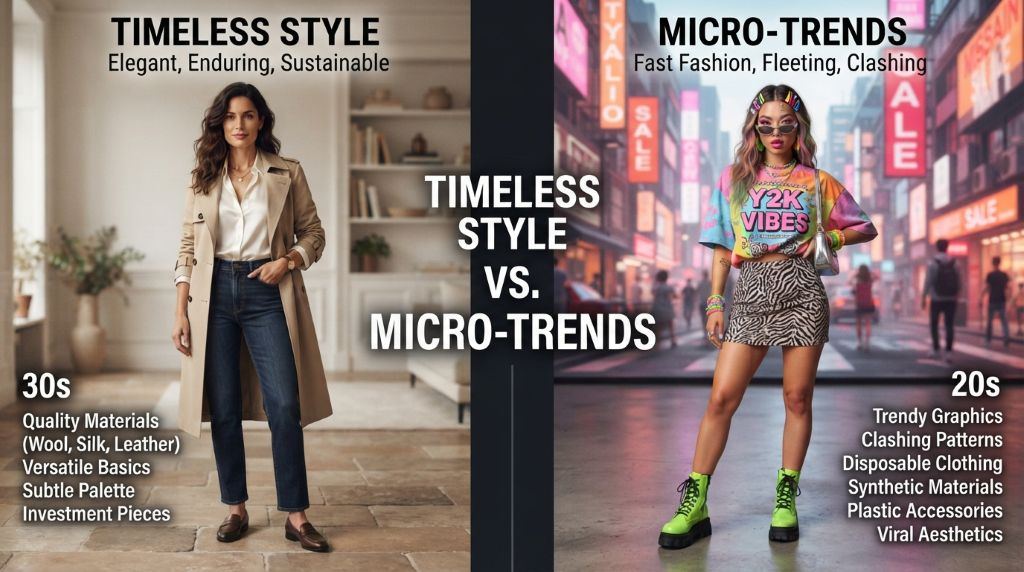
Timeless style means clothing that stays stylish for years or even decades. Think of a crisp white shirt, dark jeans, a trench coat, or a little black dress. These pieces look fresh in any season and almost any setting.
Timeless outfits share a few clear traits:
- Simple cuts and clean lines
- Neutral colors that pair easily with everything
- Strong fabrics such as cotton, wool, and linen
- A proper fit that flatters your body and lifestyle
Fashion houses revisit these basics season after season. For example, the trench coat and Breton top have stayed popular for over a century. Furthermore, classic pieces mix well with each other. One good blazer can create dozens of different outfits. Therefore, timeless style saves money, closet space, and morning decision time.
Timeless style also passes the five-year test. Ask yourself if a piece will still feel right in five years. If yes, it likely belongs in your closet. Additionally, classic clothing often carries better stitching, so it survives frequent wear and washing. In short, timeless style rewards patience over impulse.
What Are Micro-Trends?
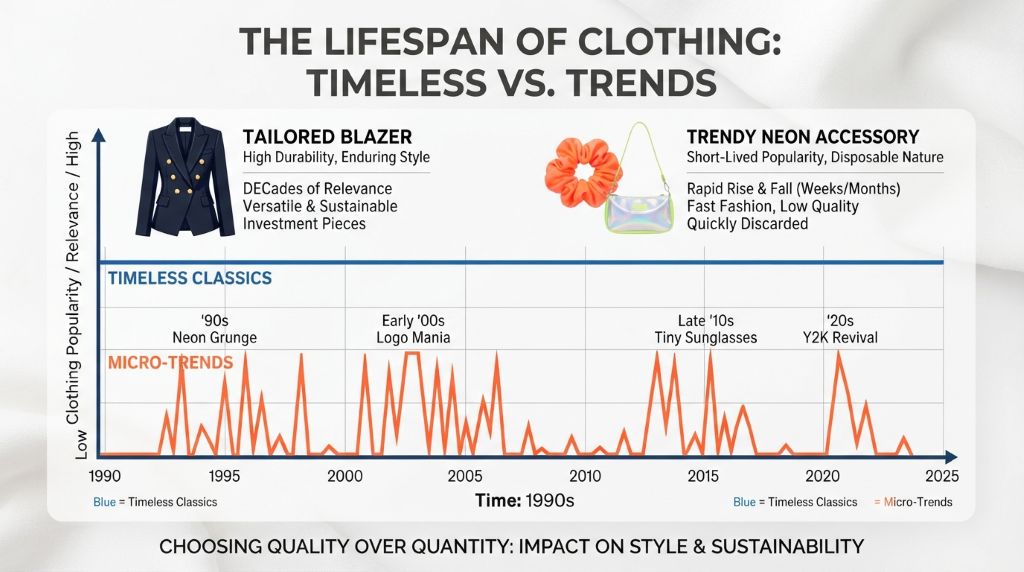
Micro-trends are style crazes that rise and fall within weeks or months. Platforms such as TikTok and Instagram fuel their speed. The hashtag #TikTokMadeMeBuyIt has gathered tens of billions of views. As a result, products can go viral and sell out overnight.
Recent examples include aesthetics like “coastal grandmother,” “barbiecore,” and “mob wife.” One week, ballet flats dominate every feed. The next week, something else replaces them. McKinsey’s State of Fashion report notes that social media now shapes trends faster than traditional runways.
Most micro-trends follow the same cycle:
- A video or celebrity sparks sudden interest.
- Fast retailers copy the look within weeks.
- The item floods feeds and store shelves.
- Oversaturation kills the appeal.
- Shoppers move on to the next craze.
This speed excites many shoppers. However, it also pressures them to buy constantly just to stay current. Moreover, algorithms reward novelty over everything else. Therefore, even loyal trend followers struggle to keep up without endless purchases.
Why Micro-Trends Fade So Fast
Micro-trends die quickly because of three main forces. First, algorithms push fresh content all day long. Once everyone owns an item, it no longer feels special. Second, fast fashion supply chains move incredibly fast. Major retailers can copy a look and stock it in stores within weeks. Third, oversaturation creates fatigue. When an item appears in every store and feed, shoppers see it as old news.
Psychology plays a role here as well. Viral shopping often delivers a quick rush of excitement. However, that feeling fades fast, sometimes within days. We adapt to new things quickly and then crave the next one. Therefore, the cycle repeats without lasting satisfaction.
Additionally, trends now disappear faster because more people wear them at once. In past decades, a trend might last several years. Today, a micro-trend can vanish before your package even arrives. For this reason, many viral pieces never earn a second wear.
The Hidden Cost of Chasing Trends
Trend chasing costs more than money. It also costs the planet. The Ellen MacArthur Foundation reports that people now wear each garment 36% fewer times than 15 years ago. Furthermore, the same foundation found that one garbage truck of textiles is landfilled or burned every second. In the United States, the Environmental Protection Agency says more than 11 million tons of textiles went to landfills in a single recent year.
The financial cost adds up too. Small trend purchases feel cheap at first. However, twenty $30 impulse buys cost $600. Meanwhile, that money could buy one excellent coat that lasts a decade. Additionally, trend-heavy closets create decision fatigue. Many people own full drawers yet still feel they have nothing to wear.
Fortunately, a better path exists. ThredUp’s annual resale report shows the secondhand market is growing far faster than regular retail. Shoppers clearly want longer-lasting value. Therefore, many people now choose quality over quantity.
What Makes an Outfit Last?
So, what separates a lasting outfit from a short-lived one? Experts point to five key factors.
- Fabric quality: Natural fibers and tight weaves resist wear and washing.
- Proper fit: Clothes that fit your body always look more polished.
- Versatile color: Neutrals pair with almost everything you own.
- Classic shape: Simple designs avoid dating themselves.
- Quality build: Strong stitching and sturdy hardware extend a garment’s life.
Fit deserves special attention. Even an expensive garment looks poor if it hangs badly. Therefore, tailoring is one of the smartest style investments. A $20 alteration can transform a $50 jacket.
Another useful tool is cost per wear. Divide an item’s price by how often you wear it. A $200 coat worn 200 times costs $1 per wear. However, a $40 top worn twice costs $20 per wear. As a result, expensive classics often beat cheap trends on real value.
Care matters too. Wash delicates gently, repair loose buttons quickly, and store wool properly. Small habits can double a garment’s lifespan.
How to Build a Timeless Wardrobe
Building a lasting wardrobe takes planning, not luck. Follow these steps:
- Audit your closet. Set aside pieces you have worn in the past year. Donate the rest.
- Identify gaps. List basics you reach for but never own in good condition.
- Start with core items. Buy a white shirt, dark jeans, a blazer, and one great coat.
- Choose a simple palette. Two neutrals and one accent color create dozens of outfits.
- Buy the best quality you can afford. Wait for sales on classic pieces.
- Apply the one-in, one-out rule. This keeps your closet clutter-free.
Additionally, resist the urge to build everything at once. Add one strong piece per month. Within a year, you will own a functional and flexible wardrobe. Remember, timeless does not mean boring. Texture, jewelry, and shoes add personality to simple bases. Therefore, patience pays off both financially and practically.
Conclusion
Fashion should serve you, not stress you. Micro-trends offer fun and novelty; however, they rarely last. How to style summer outfits can be approached with the same mindset by choosing versatile pieces that work across different occasions and seasons. Timeless style offers reliability, value, and lower waste. The smartest wardrobes combine both. Build a base of quality classics first. Then add trend items sparingly, ideally secondhand or rented.
Ready to start? Open your closet this weekend. Remove anything you have not worn in a year. Then list three timeless basics you truly need and buy the first one this month. Small steps today create a wardrobe that lasts for years.
FAQs
1. What is the main difference between timeless style and micro-trends?
Timeless style stays relevant for years. Micro-trends peak and fade within weeks or months.
2. How many pieces do I need for a timeless wardrobe?
Most people need around 30 to 40 versatile pieces, including shoes and outerwear.
3. Are micro-trends bad for the environment?
They can be. Rapid trend cycles increase garment waste and encourage overbuying.
4. How do I test if a piece is timeless?
Ask if you would wear it in five years and if it matches at least three items you own.
5. What does cost per wear mean?
It is the item’s price divided by how many times you wear it. A lower number means better value.
No Comments