
26 Sep How to Make Your Florida Home Stand Out During the Holiday Season
In most of the country, holiday decorating is a race against snow, frozen fingers, and early sunsets. In Florida, the rules are completely different — and that’s exactly what makes December decorating here so much fun. You’re working with warm evenings, palm trees, and neighbors who are just as competitive about their light displays as anyone up north. If you want your home to be the one people slow down for, you need a strategy built for Florida’s climate, not a copy-pasted approach from a northern decorating blog. Motion lights tend to be the single biggest difference-maker here, which is why it helps to view the full guide on how they perform in Florida’s heat, humidity, and rain before you buy. This article walks through what actually works, what to skip, and how to build a display that feels intentional rather than cluttered.
Quick Answer
To make a Florida home stand out during the holidays, lean into what makes the state unique: tropical landscaping, mild evenings, and a longer outdoor season. Use motion-activated and animated lighting instead of static strands, incorporate palm trees and pool areas into the display, choose weather-rated fixtures built for heat and humidity, and keep the color scheme cohesive. Timing and layering matter more than sheer volume.
Key Takeaways
- Florida’s heat, humidity, and afternoon storms demand outdoor-rated fixtures — indoor lights used outside tend to fail quickly.
- Motion and animated lights create movement that static strands can’t match, and they’re usually the first thing neighbors notice.
- Palm trees, pool cages, and screened lanais offer decoration surfaces that simply don’t exist in colder states.
- A cohesive color palette across the whole yard reads as more impressive than a random mix of every light color available.
- Since Florida evenings are comfortable, your display is visible for more hours of foot traffic and drive-by viewing than in colder regions — timing the display to neighborhood walk hours helps.
Why Florida Holiday Decoration Is Different
Decorating in Florida isn’t just “the same thing but warmer.” The environment changes what products survive, what looks good, and how long your display stays up. Humidity is the biggest practical enemy. Standard indoor light strands and cheap extension cords corrode at the contacts when exposed to Florida’s damp air, even during the dry season. Afternoon thunderstorms can roll through in minutes, and water pooling in unsealed connectors causes shorts, flickering, and dead strands that you won’t notice until evening.
Heat is the second factor. LEDs handle Florida warmth far better than traditional incandescent bulbs, which run hot and draw more power. On a 75-degree evening, an incandescent display is less of a fire risk than up north, but it still wastes electricity and tends to burn out faster. LED options last longer, run cooler, and give you more control over color and animation. The third factor is your landscaping. A northern lawn is mostly flat snow-covered ground. A Florida yard has palms, citrus trees, hedges, and often a pool or lanais — all of which are far more interesting to light , For more seasonal trends, check out the dallas apparel and accessories market october 2026.
Choosing Lights That Survive a Florida Winter
The single most common mistake is buying lights designed for indoor use and hanging them outside “just for a few weeks.” In Florida, that few weeks can include rain, humidity above 70 percent, and temperature swings that stress plastic housings. Choose products explicitly rated for outdoor use, and look for IP ratings (Ingress Protection) — IP65 or higher means the fixture is protected against dust and water spray. IP44 is a minimum acceptable rating for covered areas, but anything exposed to direct rain should be IP65 or better.
Pay attention to connector design too. Molded, sealed connectors resist moisture far better than push-in plugs. If you’re running several strands together, use outdoor-rated extension cords and keep connection joints off the ground or wrapped with dielectric grease where possible. This one step prevents most of the mid-season failures people blame on “bad lights.”
Motion Lights vs Static Lights
Static lights are reliable, affordable, and easy to install. They create a warm, classic look but don’t draw much attention once the novelty fades. Motion and animated lights — including projectors, chasing strips, and synchronized fixtures — add movement, which draws the eye naturally. The trade-off is cost and complexity. Motion lights typically cost more upfront and may require additional wiring or weatherproof housings, but they create a display that people actually stop to watch. For a standout Florida home, a mix works best: motion features as focal points, static strands as background fill.
Use Florida’s Landscape as Your Display
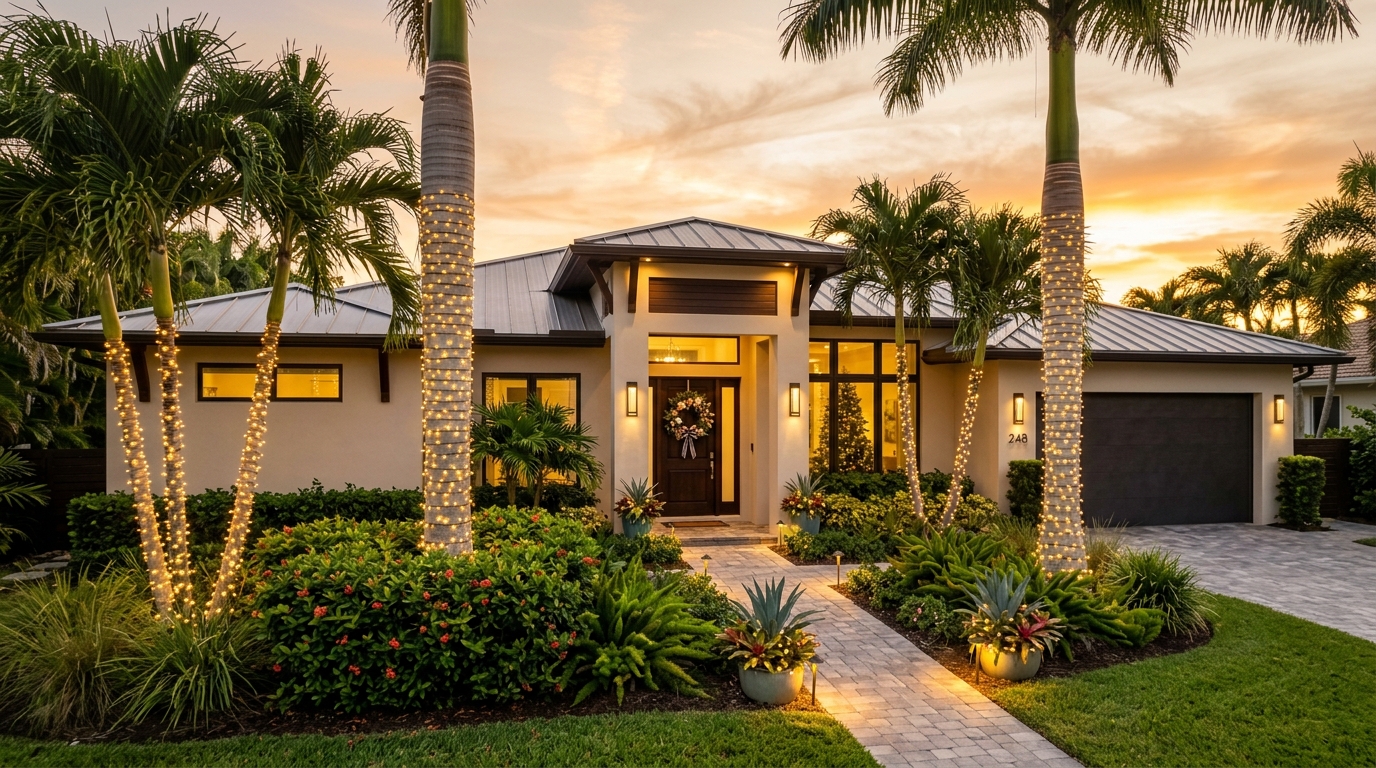
Where a northern display wraps porch railings and bare trees, a Florida display can wrap palm trunks, line pool cages, drape through citrus branches, and highlight the architecture of a screened lanais. Palm trees are especially effective because their height spreads light across the whole yard. Wrapping the trunk creates a vertical column of light, while stringing lights up through the fronds creates a canopy effect that’s hard to beat.
Water features are another Florida advantage. Reflections from a lit pool or fountain double the visual impact of any light you hang. If you have a pool, consider floating or submersible fixtures rated for water use, and keep electrical connections far from the water’s edge with proper GFCI protection. Always prioritize electrical safety near water, and use a licensed electrician if you’re unsure about outdoor outlets or load limits.
Color Palette Tips
A display with three or fewer colors reads as more polished than one using every color in the box. Classic warm white paired with red looks traditional. Cool white with blue reads modern and crisp. Warm white alone can look elegant and expensive. Whichever direction you choose, stay consistent across the front of the house so the eye isn’t jumping between conflicting palettes.
Making Your Display Weather-Ready
Before you hang a single strand, check a few practical things. Confirm that outdoor outlets are GFCI-protected, since these trip automatically if moisture causes a fault. Add up the wattage of everything you plan to run on one circuit and stay within safe limits — most household circuits handle around 15 amps, but holiday displays can add up quickly if you’re using projectors and animated fixtures. Timer plugs are also worth the small cost: they keep your display on during prime viewing hours and shut it off automatically, which saves energy and reduces wear on the fixtures.
Secure everything against wind. Florida winter storms may be milder than summer hurricanes, but a strong cold front can still send loose decorations into the street. Use zip ties, clips rated for outdoor use, and weighted bases for any freestanding props.
Timing and Presentation Matter More Than Volume
Because Florida evenings stay pleasant, more people walk, bike, and drive through neighborhoods after dark during December. That means your display is being judged over a longer window than in colder states, where people rush from car to door. Set your display to come on at dusk and stay lit through the evening walk hours. Keep pathways clear so visitors can actually approach, and avoid strobing or extremely bright flashing sequences that could bother neighbors or drivers.
If you want your home to stand out for the right reasons, focus on a clean, cohesive look rather than maximum clutter. A well-planned display with a few animated focal points will generally get more attention than a chaotic pile of every decoration you own.
Common Mistakes to Avoid
- Mixing indoor and outdoor fixtures, which shortens the life of both.
- Overloading one outlet with too many animated fixtures.
- Leaving connection points lying on wet ground.
- Using colors with no clear theme, which makes the yard look busy rather than impressive.
- Skipping secured mounts, leading to wind damage after the first storm.
Frequently Asked Questions
Are motion lights worth it for a Florida holiday display?
Yes, especially for a home that wants to stand out. Motion and animated lights add movement that static strands can’t, and they’re typically the feature visitors notice first. Just make sure the fixtures are rated for outdoor use in humid conditions.
Can I use regular Christmas lights outdoors in Florida?
Only if they’re rated for outdoor use. Indoor-only strands can corrode or short out in Florida’s humidity and rain, even during the short holiday season. Check for an outdoor or IP rating on the packaging.
How do I protect my display from Florida rain?
Use sealed, mold-in connectors, keep plugs off the ground, wrap exposed joints with dielectric grease, and confirm all outdoor outlets are GFCI-protected. Timers that shut off during storms add another layer of safety.
What’s the best way to light palm trees?
Wrap the trunk tightly with outdoor-rated strands for a vertical column effect, or run lights up into the fronds for a canopy look. Secure with outdoor clips or ties so wind doesn’t pull everything loose.
How early should I set up my Florida holiday display?
Late November is common, but many Florida homeowners start right after Thanksgiving to enjoy the full season. Because the weather is mild, lights can go up earlier than in colder states without risking snow or ice damage.
Will LED lights save money on a large display?
Generally yes. LEDs use far less power than incandescent bulbs and run cooler, which reduces both electricity costs and heat-related failures. On a large animated display, the difference over a full season can be noticeable.
Conclusion
Making a Florida home stand out during the holidays comes down to working with the state instead of copying a colder-climate template. Choose weather-rated fixtures, use motion and animation for focal points, build the display around palms and pool areas, and keep your color scheme consistent. Get the safety details right — GFCI outlets, sealed connections, secure mounts — and your display will hold up through rain and warm evenings alike. Start with a clear plan, invest in a few quality animated pieces, and let Florida’s unique landscape do the rest.
No Comments