
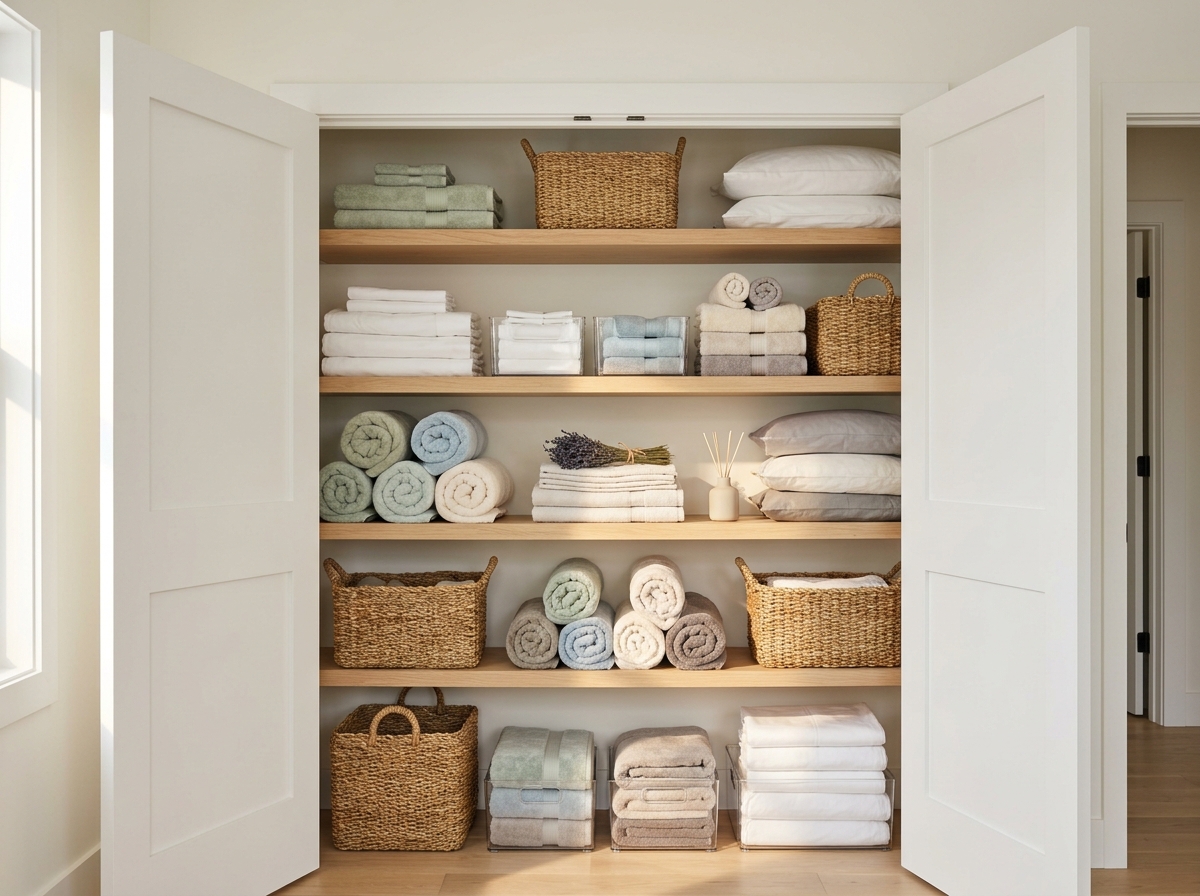
12 Oct A Beginner’s Guide to Organizing Your Linen Closet
Few things derail a calm morning faster than reaching for a pillowcase and pulling out a tangled mess of mismatched sheets instead. Most linen closets fail for the same reason: nobody measured anything before stacking things inside. Before you buy a single basket or shelf divider, it helps to know what you are actually storing, and that starts with knowing the measurements of standard pillow and other bedding sizes. Once you know those numbers, every decision that follows becomes simpler, from shelf height to folding method. This guide walks beginners through a practical, measurable approach to a closet that stays organized.
Quick Answer
To organize a linen closet, start by measuring your shelf depth, height, and width, then match those dimensions to your largest stored items, such as comforters and pillows. Group items by category and frequency of use, fold everything to a consistent footprint, and use clear bins or shelf dividers so categories stay separated. The goal is not maximum storage; it is quick retrieval and easy restocking.
Key Takeaways
- Measure your shelves before buying any container, since most standard closets are shallower than people assume.
- A standard pillow typically measures around 20 by 26 inches, which means most shelving needs at least 27 inches of depth for pillows to lie flat.
- Consistent folding matters more than fancy containers, because uniform stacks store more and stay neater.
- Store items by frequency of use, with daily items at eye level and seasonal items on high or low shelves.
- Fabric type affects storage: natural fibers need airflow, while vacuum-sealed bags can damage loft over time.
Start With Measurements, Not Containers
The most common beginner mistake is buying bins and baskets first. Those purchases then dictate how you organize, rather than your actual space and belongings. Measure the closet interior before anything else.
What to measure
- Shelf depth: The front-to-back distance. This decides whether pillows, folded comforters, or large towels can lie flat.
- Space between shelves: Measure from the top of one shelf to the bottom of the next. A stack of six folded sheets needs a different clearance than two folded duvets.
- Shelf width: This determines how many folded stacks or bins fit side by side.
- Door swing and clearance: A closet door that opens inward reduces usable depth at the front edge.
A typical reach-in linen closet has shelves roughly 12 to 16 inches deep. That depth handles folded towels and sheets well, but it will not hold a pillow lying flat unless the shelf is unusually deep. This is where knowing bedding dimensions pays off: if you understand a standard pillow is about 20 by 26 inches, you know that a 14-inch shelf cannot store it flat, so pillows belong on a deeper shelf, on the top shelf standing upright, or in a separate location entirely.
Shelf spacing rules of thumb
Adjustable shelving is worth the small upgrade. As a general guide:
- 10 to 12 inches of clearance fits folded towels and most sheet sets.
- 14 to 18 inches fits bulky comforters and quilts.
- Taller gaps waste vertical space, so add an extra shelf where possible.
Group by Category and Frequency of Use
Random stacking is what causes closets to drift back into chaos within weeks. Category grouping gives every item a fixed home, so restocking becomes automatic.
A workable separation for most households:
- Bedding: sheets, pillowcases, duvet covers
- Bath linens: towels, hand towels, washcloths
- Guest or seasonal items: extra blankets, holiday linens
- Utility: cleaning cloths, older towels reserved for spills
Then assign shelves by how often you reach for something. Daily towels and sheets go at waist or eye level. Guest bedding and seasonal blankets go on the top or bottom shelf. This single decision reduces daily disruption because you are not rummaging past rarely used items to reach the ones you need most.
Keep sets together
Storing a folded sheet set inside its matching pillowcase is a common and effective trick. It keeps the pieces together, prevents the “where is the fitted sheet” problem, and creates uniform, stackable bundles. For households with multiple bed sizes, label the shelf edge with the size so nobody grabs a queen sheet for a twin bed.
How to Fold for a Consistent Footprint
Uniform folding is the quiet engine of an organized closet. When everything folds to roughly the same rectangle, stacks stay straight and you can see at a glance what is running low.
- Fold fitted sheets by tucking the corners into each other first, then folding into a rectangle.
- Fold flat sheets and duvet covers to a width that matches your shelf depth, not your closet width.
- Fold towels in thirds lengthwise, then in half or thirds again, so they stand or stack consistently.
- Stack similar heights together so nothing topples.
Store stacked items so the folded edge faces outward. That way you can pull one item without disturbing the whole pile, and you can see the fold line for a quick visual check of what is left.
Choosing Containers and Dividers
Containers should solve a specific problem, not decorate the closet. Use them where they add control:
- Shelf dividers: Keep stacks of sheets and towels from sliding into each other.
- Clear bins: Useful for small items like washcloths, travel toiletries, or seasonal linens, because you can see contents without opening.
- Labeled baskets: Helpful on high shelves where you cannot easily see inside.
Avoid buying bins before measuring, and avoid overfilling them. A bin packed so tightly that you must dig through it defeats the purpose. Leave a little slack so items slide in and out easily.
Fabric and storage trade-offs
Not all linens tolerate the same storage conditions.
- Natural fibers like cotton and linen benefit from airflow and can yellow if sealed in plastic for long periods.
- Vacuum-sealed bags save dramatic space, but prolonged compression can flatten pillow loft and crush down-filled items, so use them for short-term or off-season storage rather than long-term.
- Damp closets are a real threat. If your closet sits against an exterior wall or near a bathroom, add a moisture absorber and check linens seasonally for musty smells.
This is a trade-off worth taking seriously: squeezing everything into the smallest possible space looks tidy, but it can shorten the life of the items you are trying to protect.
A Realistic Step-by-Step Plan
If you want a single sequence to follow on a free afternoon, this is it.
- Empty the closet and wipe down the shelves.
- Measure shelf depth, width, and clearance, and note any adjustable notches.
- Sort everything into keep, relocate, and discard or repurpose piles.
- Group the keep pile by category and frequency of use.
- Fold everything to a consistent footprint, keeping sets together.
- Assign shelves, then place items and check that each stack is easy to pull from.
- Add dividers, bins, and labels only where a real problem remains.
Most beginners skip the emptying step, but it is the only reliable way to see how much you actually have and how much space each item truly needs.
Common Mistakes to Avoid
- Buying containers before measuring the shelf.
- Storing heavy items, like thick comforters, on the top shelf where they are hard to reach and drop easily.
- Mixing bed sizes on one shelf without labels.
- Ignoring humidity, which is one of the most common causes of musty linens.
- Folding to inconsistent sizes, which wastes space and makes stacks unstable.
Frequently Asked Questions
How do I know if my shelf can hold a pillow?
Measure the shelf depth and compare it to the pillow’s width. A standard pillow is roughly 20 by 26 inches, so a shelf must be at least around 27 inches deep to hold it flat. Shallower shelves work better if pillows stand upright or are stored elsewhere.
Should I store sheets in the original packaging?
Not usually. Original plastic packaging limits airflow and often traps moisture. Folded bundles stored inside a matching pillowcase keep sets together while allowing the fabric to breathe.
Is it better to roll or fold linens?
Folding works well for sheets, towels, and blankets because it creates stable, stackable rectangles. Rolling is useful for small items or for fitting linens into narrow bins, but it can be slower to stack evenly.
How often should I reorganize a linen closet?
A quick seasonal check is usually enough. Pull everything out, refold anything that has drifted, check for dampness or musty odors, and confirm that daily-use items are still at eye level.
Can I store linens in the garage or attic?
It is possible but risky. Temperature swings and humidity in garages and attics can damage fabrics and encourage mildew. If you must store them there, use breathable cotton bags and inspect periodically.
What is the best way to keep stacks from toppling?
Keep stack heights modest and match the sizes of stacked items. Shelf dividers add support, and folding everything to the same footprint prevents the uneven piles that tend to slide.
Conclusion
An organized linen closet comes down to three habits: measure before you buy, group by category and how often you reach for something, and fold everything to a consistent size. Knowing basic bedding dimensions, including how large a standard pillow is, tells you immediately which shelves can hold what. Start by emptying and measuring your closet, then organize in one pass rather than buying your way to tidiness. The payoff is a closet where you can grab a matching sheet set in seconds and restock without thinking.
No Comments