
20 Sep The Health Benefits of Playing Outdoors for Toddlers and Young Children
In today’s fast-paced world, filled with screens and indoor distractions, encouraging outdoor play is more important than ever. For toddlers and young children, playing outside is not just about fun and games – it’s crucial for their physical, emotional, and cognitive development. Outdoor activities, from climbing and running to bouncing on a trampoline 10ft or exploring a kids playhouse, provide a wide range of health benefits that help shape a child’s growth. In this article, we’ll explore the numerous advantages of outdoor play and how specific equipment can enhance these benefits.
1. Physical Health and Fitness
One of the most obvious benefits of outdoor play is physical activity. Children naturally love to run, jump, climb, and explore, and outdoor environments offer the perfect space to burn energy and develop strength. For toddlers and young children, regular physical activity can:
- Improve motor skills: Activities like climbing into a kids playhouse or bouncing on a trampoline 10ft help children develop their gross motor skills, coordination, and balance. Jumping on a trampoline, in particular, strengthens leg muscles and enhances cardiovascular health while climbing and exploring help improve upper body strength.
- Boost cardiovascular health: Running, jumping, and other outdoor activities promote heart health and overall fitness. When toddlers engage in active play, their heart rates increase, helping to build a healthy cardiovascular system.
- Promote healthy weight: With the growing concern over childhood obesity, outdoor play can be a powerful tool in helping children maintain a healthy weight. Active play burns calories and reduces sedentary behaviour, helping to instil healthy habits from a young age.
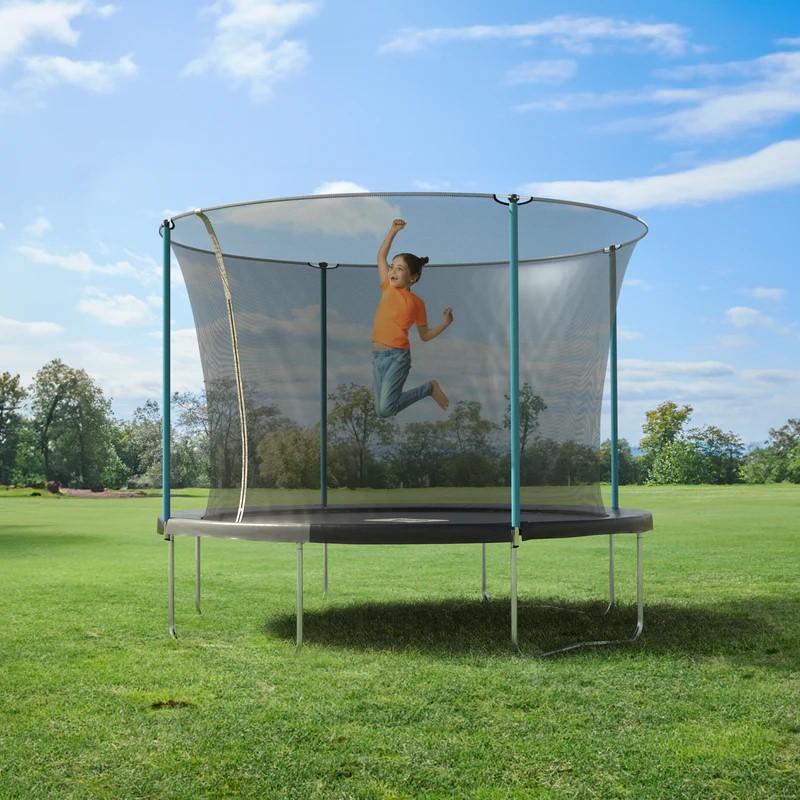
Having the right outdoor toys, such as a trampoline 10ft, can make physical activity even more appealing to young children. The size of a 10ft trampoline is ideal for providing enough space for toddlers to jump freely while still being manageable in a garden. Trampolining also offers a low-impact workout, making it easier for their joints to develop while still providing a fun and effective way to stay active.
2. Development of Fine and Gross Motor Skills
Outdoor play promotes the development of both fine and gross motor skills in toddlers and young children. Gross motor skills involve the use of large muscle groups, which children engage through activities like climbing, jumping, and running. Whether they’re scaling the walls of a kid’s playhouse or bouncing on a trampoline, children are constantly working on balance, coordination, and agility.
- Gross motor skills: Climbing ladders, crawling through tunnels, or jumping on a trampoline all help develop the muscles needed for gross motor control. A trampoline 10ft is large enough to allow toddlers to practise bouncing, which improves coordination and spatial awareness.
- Fine motor skills: Outdoor play isn’t just about large movements. Children also engage their fine motor skills when they handle smaller objects or manipulate toys. Playing with small items inside a kid’s playhouse or picking up pebbles and leaves while outdoors helps improve hand-eye coordination and dexterity.
This combination of motor skill development is essential for toddlers as they grow, helping them master tasks like holding utensils, writing, and dressing themselves.
3. Emotional Well-being and Mental Health
Outdoor play is vital for physical health and plays a crucial role in children’s emotional and mental well-being. Spending time in nature and engaging in free, unstructured play helps toddlers develop a sense of independence and confidence.
- Stress relief: For young children, play is a natural way to relieve stress. Being outdoors in open spaces, especially in a safe environment like a kids playhouse or a trampoline, helps children release pent-up energy and reduce anxiety. Nature has a calming effect, and studies show that time spent outdoors can improve mood and decrease feelings of stress in both children and adults.
- Self-confidence: Mastering new physical challenges, such as climbing onto a trampoline or navigating a playhouse, boosts a child’s confidence. As they become more comfortable with their surroundings and their own abilities, they gain a sense of achievement and self-worth. When a child climbs the ladder of a kids playhouse or learns to jump on a trampoline 10ft, they’re overcoming fears and building resilience.
- Social skills: Outdoor play often involves group activities, where children learn to share, take turns, and cooperate with others. Whether they’re playing pretend in a kid’s playhouse or taking turns bouncing on a trampoline, outdoor play fosters essential social skills that will serve them well throughout life.
4. Cognitive Development and Problem-Solving Skills
Outdoor play naturally encourages curiosity and creativity, allowing children to explore their environment and develop problem-solving skills. The unstructured nature of outdoor play promotes cognitive development in ways that indoor play can’t always replicate.
- Imaginative play: A kid’s playhouse is perfect for toddlers to engage in imaginative play. It can transform into a pirate ship, a castle, or a secret hideout, sparking creativity and imaginative thinking. Imaginative play also helps children understand the world around them as they mimic adult behaviours and create their own narratives.
- Problem-solving: Whether it’s figuring out how to climb onto a trampoline, how to organise their toys in a playhouse, or how to navigate an outdoor obstacle, outdoor play encourages children to think critically. They learn to assess situations, make decisions, and solve problems while exploring and playing.
- Cognitive flexibility: Outdoor environments are ever-changing, offering new challenges and opportunities for learning. Toddlers must adapt to different conditions, from navigating uneven ground to dealing with different weather. These experiences help build cognitive flexibility, which is the ability to switch between thinking about different concepts and adapting to new situations.
5. Exposure to Fresh Air and Vitamin D
Spending time outdoors allows children to soak up the sunshine, which is the best natural source of vitamin D. This essential vitamin helps with calcium absorption, promoting healthy bone growth. Adequate vitamin D is especially important during the early years when bones are developing rapidly.
In addition to vitamin D, fresh air is crucial for good health. Outdoor play improves lung function and provides children with exposure to different environments, strengthening their immune systems and reducing the likelihood of respiratory issues.
6. Building Social Skills and Cooperation
Outdoor play offers children the opportunity to interact with peers, siblings, and even parents in a more relaxed, natural setting. Whether they’re playing together in a kids playhouse or taking turns on a trampoline 10ft, outdoor play encourages cooperation, teamwork, and social interaction.
- Taking turns: Outdoor toys like trampolines naturally teach children about sharing and patience. As toddlers wait their turn to bounce on the trampoline or share space in a playhouse, they learn the value of cooperation and fairness.
- Teamwork and communication: Group play, whether structured or unstructured, helps children practise communication skills. They learn to negotiate, collaborate, and resolve conflicts as they work together to achieve goals, whether it’s building an imaginary fort in the playhouse or playing a game of trampoline tag.
Conclusion
The health benefits of outdoor play for toddlers and young children cannot be overstated. From physical fitness and motor skill development to improved mental health and cognitive growth, the simple act of playing outside can have lifelong positive effects. Adding the right outdoor toys, such as a trampoline 10ft or a kids playhouse, enhances these benefits, providing a fun and engaging way for children to stay active and develop crucial life skills.
By encouraging outdoor play, you’re not only promoting your child’s physical health but also fostering creativity, independence, and social interaction – all of which are vital for their development. So, step outside, let them explore, and watch as they grow stronger, smarter, and happier.
No Comments