
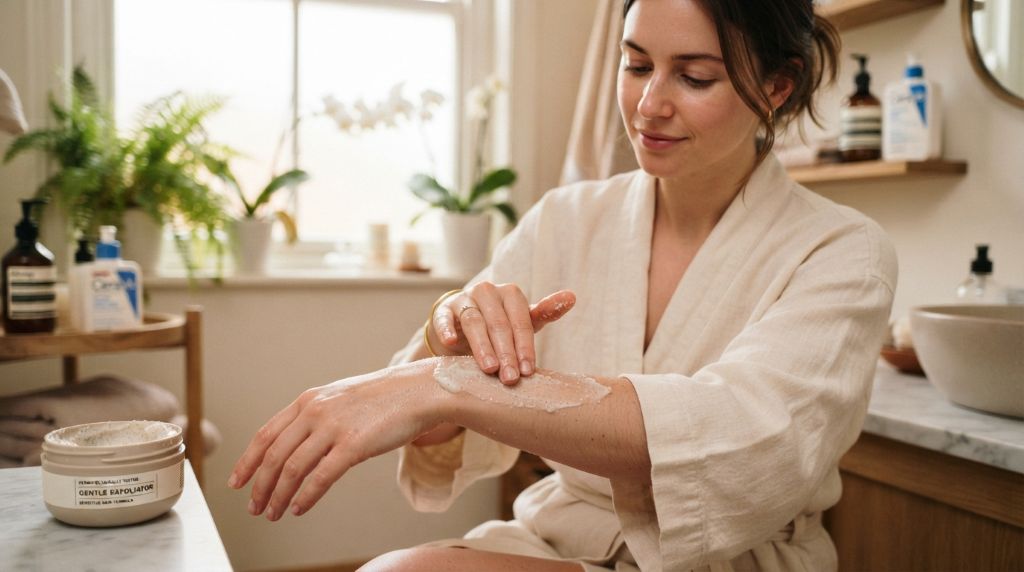
15 Sep What Type of Body Scrub to Use When You Have Skin Asthma
If you have skin asthma, you already know the struggle. Your skin turns red, itchy, and dry without warning. Doctors call this condition atopic dermatitis, but most people know it as eczema. Because of this, simple things like a body scrub feel risky. One wrong product can trigger days of itching and flaking. However, gentle exfoliation is still possible with the right choices. In fact, the correct scrub can remove dead skin and help your moisturizer work better. In this article, I explain exactly which body scrubs suit skin asthma. I will also share my own trial-and-error story with sensitive skin. By the end, you will know what to buy, what to avoid, and how to scrub safely.
Why Skin Asthma Changes the Exfoliation Rules
Healthy skin has a strong outer barrier. This barrier holds moisture in and keeps irritants out. Skin asthma weakens that barrier. Therefore, your skin loses water faster and reacts to things others never notice. Rough textures, strong scents, and harsh chemicals can all spark a flare-up.
The numbers show how common this condition really is. About 31 million Americans live with some form of eczema. Roughly 16.5 million adults have atopic dermatitis itself. Additionally, many of them report avoiding skincare products out of fear. That fear is understandable, but total avoidance is not the answer.
Dead skin cells still build up on sensitive skin. This buildup causes dullness, flaking, and clogged pores. It can even block your moisturizer from soaking in properly. Therefore, gentle exfoliation still has a place in your routine. The key word here is gentle.
Here is the honest truth, though. Scrubbing during an active flare-up always makes things worse. Broken or cracked skin needs healing first, not friction. So the rule is simple. Wait for calm skin, then exfoliate with care. Additionally, always patch test any new product on a small spot first. Your inner arm works well for this. Wait 24 to 48 hours and watch for any reaction. If the spot stays calm, the product has passed a basic safety check.
The Best Body Scrub Types for Skin Asthma
Not all scrubs deserve a place in your shower. Some are far kinder to sensitive skin than others. Based on dermatologist guidance and personal testing, these options work best:
- Fine sugar scrubs: sugar grains are soft, rounded, and dissolve in warm water
- Colloidal oatmeal scrubs: oatmeal calms itching while it gently polishes the skin
- Cream-based scrubs: a rich, creamy base cushions the scrubbing particles
- Gentle enzyme scrubs: fruit enzymes loosen dead skin without any rubbing at all
Fine sugar scrubs are the safest physical option. Brown sugar works even better than white sugar because its grains are smaller and softer. Additionally, sugar melts as you scrub. Therefore, it cannot over-exfoliate the way hard particles can.
Colloidal oatmeal deserves special praise. A scrub that combines finely ground oats with a soft oil gives you two benefits at once. It lifts away flakes while it soothes the itch underneath.
Enzyme scrubs take a different approach. They use fruit enzymes from papaya or pumpkin to dissolve dead cells. There is no rubbing involved. However, enzymes can still irritate very reactive skin. So start slowly and patch test first.
Whichever type you choose, one rule stays fixed. The product must be fragrance-free. Scent is one of the most common eczema triggers, so skip it entirely.
Ingredients to Avoid in Body Scrubs
Knowing what to buy is only half the job. You also need to know what to leave on the shelf. Many popular scrubs contain ingredients that spell trouble for skin asthma. Read labels carefully and avoid these common triggers:
- Walnut shells and apricot kernels: sharp edges create tiny tears in weak skin
- Sea salt and salt scrubs: salt stings broken skin and draws out moisture
- Added fragrance: both synthetic and natural scents frequently trigger flare-ups
- Essential oils: peppermint, citrus, and tea tree oils often irritate eczema
- Denatured alcohol: this dries the skin and weakens the barrier further
- Strong acids: high-strength glycolic or salicylic acid scrubs are too harsh
- Dyes and colorants: unnecessary additives that only raise reaction risk
Walnut shell scrubs deserve an extra warning. Dermatologists often compare them to scraping skin with sandpaper. That description sounds extreme, but it fits. For someone with skin asthma, one use can undo weeks of healing.
Additionally, watch out for marketing traps. Words like natural and organic do not mean safe. Lemon and coconut scrub sounds lovely. However, lemon juice can burn sensitive skin, and coconut fragrance is a known irritant. Therefore, trust the ingredient list, never the front label.
A shorter ingredient list is usually a better sign. Fewer ingredients mean fewer chances for a reaction. When in doubt, choose the plainest option available.
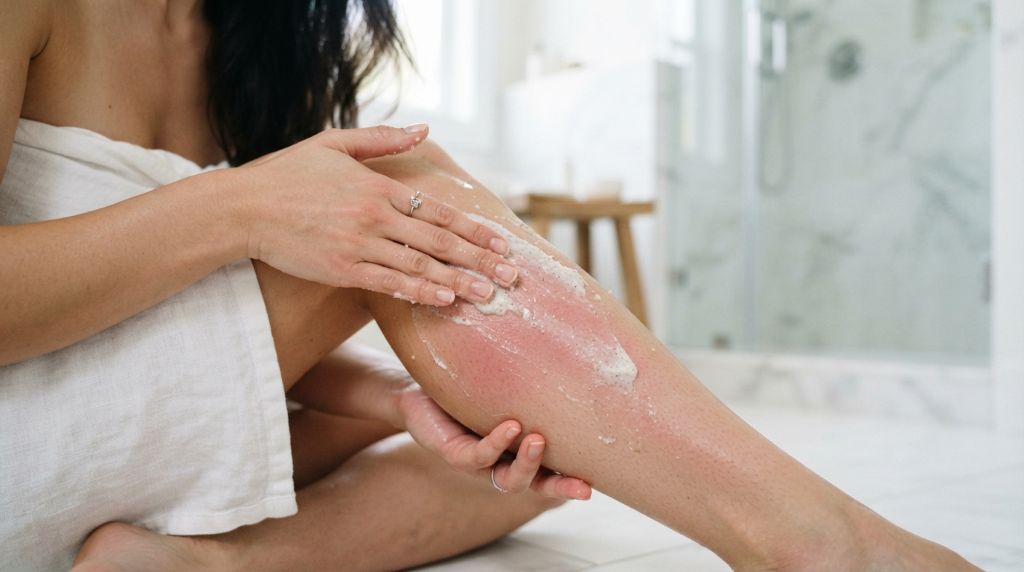
How to Scrub Safely When You Have Skin Asthma
Using the right scrub matters, but using it the right way matters more. Technique can protect your skin or damage it. Follow these steps every single time:
- Wait until your skin is calm with no open patches
- Patch test the product on your inner arm first
- Wet your skin with warm, never hot, water
- Apply the scrub with flat hands or a soft cloth
- Move in light, gentle circles for 30 seconds
- Rinse with lukewarm water and pat dry
- Apply a thick fragrance-free moisturizer within three minutes
That last step is the most important one of all. Dermatologists call it the soak and seal method. Moisturizing right after bathing locks water into your skin. Therefore, you heal the barrier while you exfoliate it.
Frequency matters just as much. Healthy skin can handle weekly scrubbing. Skin asthma usually cannot. Once every one to two weeks is a safer rhythm. Additionally, let your skin guide you. If you notice tightness or redness, wait longer before the next session.
Never scrub over active eczema patches, cuts, or raw areas. Skip those spots entirely, even when the rest of your skin feels fine. Also, drop the loofah. Those scratchy sponges harbor bacteria and scrub far too hard. Your clean hands are the only tool your skin truly needs.
Finally, keep water temperature low. Hot showers feel wonderful on itchy nights. However, hot water strips your skin’s natural oils and worsens dryness. Lukewarm water cleans just as well without the damage.
My Personal Story: Learning the Hard Way
I want to share something personal here. My younger cousin has lived with skin asthma since childhood. Years ago, she bought a popular coffee scrub from a social media ad. The packaging promised smooth, glowing skin. Instead, she got a burning rash across both arms within an hour.
The scrub contained coarse particles and strong fragrance. Her skin barrier, already weak, simply could not cope. It took two weeks of gentle moisturizing to calm her skin again. That mistake taught our whole family a lesson. Trendy products are not made for sensitive skin.
After that incident, she tried a simple DIY mix. It was two tablespoons of finely ground brown sugar, one tablespoon of honey, and one tablespoon of plain cooked oatmeal. She patch tested it first, then used it once every ten days. The result surprised us both. Her arms felt smoother, and her moisturizer finally seemed to sink in.
Today, she sticks to one rule. If a product cannot name every ingredient in plain words, she does not buy it. Her flare-ups have dropped noticeably since. Her story proves that sensitive skin does not need expensive products. It needs careful choices, patience, and consistency. That combination beats any fancy jar on the shelf.
Conclusion: Gentle Choices Lead to Smooth, Calm Skin
Skin asthma does not mean you must give up exfoliation forever. It simply means you must exfoliate smarter. Choose fine sugar scrubs, colloidal oatmeal blends, or mild enzyme formulas. If you prefer gentle homemade options, explore these DIY spa recipes using kitchen ingredients for simple treatments you can prepare at home. Avoid sharp shells, salt, fragrance, and strong acids. Scrub gently, only on calm skin, and always moisturize right after. Most importantly, patch test everything before it touches your arms or legs.
Your skin barrier works hard for you every day. Therefore, reward it with softness instead of friction. Smooth, comfortable skin is still possible. It just asks for a slower, kinder routine.
Have you found a body scrub that works with your skin asthma? Or did a product cause a flare-up you want to warn others about? Share your experience in the comments below. Your story could protect someone else’s skin. If this article helped you, please share it with a friend who manages eczema too.
Can I use a salt scrub if I have skin asthma?
No. Salt stings damaged skin and pulls out moisture, so fine sugar is the safer choice.
How often should I exfoliate with skin asthma?
Once every one to two weeks is enough. Let your skin’s response guide you.
Are DIY sugar scrubs safe for eczema-prone skin?
Yes, if made with fine sugar and simple, fragrance-free ingredients. Always patch test first.
Can I scrub during an eczema flare-up?
No. Wait until the skin has healed, because friction on broken skin delays recovery.
Is store-bought better than homemade for sensitive skin?
Not always. Both can work, however read labels carefully and choose fragrance-free formulas.
No Comments